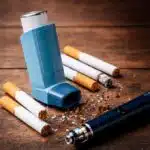
Understanding the dangers of vaping
The principle of vaping is based on the inhalation of a heated aerosol containing various chemical components. Even in the absence of combustion, this inhalation exposes the body to substances whose long-term effects remain insufficiently understood.
The liquids used may contain nicotine, solvents such as propylene glycol or vegetable glycerine, as well as chemical flavourings. When heated, these elements can transform and release compounds that irritate the respiratory tract. Several studies have highlighted increased bronchial inflammation, persistent throat irritation and a gradual deterioration of lung function among regular users. The absence of smoke does not mean the absence of impact on the airways.
Contrary to certain common beliefs, the dangers of vaping are therefore not limited to temporary discomfort. They are part of a progressive process, often silent, whose consequences can become long-lasting over time, particularly when the practice becomes regular.
The dangers of vaping among young people
Vaping now affects an increasingly young population. Secondary school pupils and teenagers are particularly exposed to this practice, often attracted by sweet, fruity or menthol flavours, as well as by communication that is widely normalised on social media. This easy access contributes to a distorted perception of vaping, which is frequently seen as harmless.
During adolescence, the brain is still in a critical phase of development. Early exposure to nicotine can disrupt essential mechanisms, including concentration, memory and stress regulation. Added to this is the risk of establishing a lasting repetitive behaviour linked to the inhalation gesture, which becomes more difficult to question in adulthood.
The dangers of vaping among young people also relate to the normalisation of inhaling chemical substances. This trivialisation weakens prevention messages and blurs the line between a practice presented as occasional and a regular use, the long-term consequences of which are still not fully understood.
Vaping among adults and seniors
Although vaping is often associated with younger generations, it also concerns a growing number of adults and seniors. Within these groups, the electronic cigarette is frequently perceived as a more acceptable alternative to traditional cigarettes, or even as a temporary practice. This perception can lead to an underestimation of the real risks involved.
Among adults, repeated inhalation of vapour may cause persistent irritation of the airways, reduced respiratory comfort and a gradual decline in lung capacity. These effects can be exacerbated by existing factors such as occupational exposure to pollutants, a sedentary lifestyle or irregular physical activity.
Among seniors, the dangers of vaping take on a particular significance. With age, respiratory and cardiovascular functions naturally become more fragile. Exposure to heated substances may increase shortness of breath, disrupt cardiac balance and complicate recovery after physical effort, even when moderate. The presence of chronic conditions or a medical history further heightens sensitivity to the adverse effects of vaping.
Finally, in both adults and seniors, vaping tends to prolong the inhalation gesture over time, delaying a broader reassessment of this habit. The dangers of vaping therefore lie not only in its composition, but also in its ability to become a lasting part of daily life, often without a clear awareness of its medium- and long-term effects.
Vaping combined with cigarette smoking and the role of nicotine
For many adults, vaping does not fully replace cigarette smoking but is added to it. This combined practice, sometimes perceived as a compromise, in reality exposes the body to a double inhalation of harmful substances. Alternating between or combining traditional cigarettes and electronic cigarettes multiplies the strain on the respiratory system, without providing any genuine reduction in risk.
The simultaneous use of both products maintains the inhalation gesture and prolongs exposure to irritating compounds. The lungs, already weakened by cigarette smoke, are subjected to heated aerosols whose effects accumulate. This combination can intensify bronchial inflammation, worsen shortness of breath and slow respiratory recovery, even among individuals who do not consider themselves heavy users.
The presence of nicotine in many electronic cigarettes also plays a central role. Inhaled in vapour form, nicotine acts rapidly on the nervous system and heart rate. Regular use may maintain a constant state of stimulation, disrupt stress regulation and increase the difficulty of breaking the habit of vaping or smoking.
Prolonged exposure to nicotine can also have cardiovascular consequences, including an increase in heart rate and greater strain on the circulatory system. When vaping is added to cigarette smoking, it does not represent a neutral transition but rather prolongs a situation of continuous exposure that is often underestimated.
The position of health authorities on the dangers of vaping
In response to the rapid growth of vaping, international health authorities are adopting an increasingly cautious stance. Contrary to a still widespread belief, electronic cigarettes are not considered risk free products.
The World Health Organization warns about the potential effects of vaping on the lungs and the cardiovascular system. The WHO highlights that inhaled aerosols contain toxic substances capable of damaging respiratory tissues, even in the absence of combustion. Repeated exposure may cause persistent irritation of the airways and contribute to the development of pulmonary disorders.
The organization also stresses the lack of long term data on the effects of vaping. This uncertainty reinforces the precautionary principle, particularly for young people whose organs are still developing and for physically active individuals, for whom respiratory function plays a central role.
In its official communications, the WHO calls for electronic cigarettes not to be trivialised and encourages clear prevention measures based on information and an overall reduction in the use of inhaled products.
Vaping and sport: a real impact on performance
Many athletes believe that vaping has no effect on their physical condition. However, the dangers of vaping are very real in the context of regular sporting activity.
Repeated inhalation of vapour can reduce respiratory capacity, lead to quicker shortness of breath and decrease muscle oxygenation. These effects are particularly noticeable in endurance sports, where breathing efficiency and recovery play a central role.
In addition, nicotine affects heart rate and blood circulation. It can cause an increase in resting heart rate and disrupt cardiovascular balance, thereby reducing performance and increasing the risk of discomfort or malaise during physical exertion.
The essential role of education in addressing the dangers of vaping
The normalisation of vaping represents a genuine educational challenge. Parents, teachers and institutions are confronted with often contradictory messaging, in which electronic cigarettes are sometimes perceived as harmless.
Education plays a key role in providing clear and factual information. Explaining the dangers of vaping, without excessive alarmism but also without minimising the risks, enables both young people and adults to make informed choices. Prevention also involves challenging common misconceptions, particularly the belief that vaping has no consequences for health.
Transparent and accessible information helps restore a more realistic perception of this practice and encourages individuals to question their own habits.
Passive vaping and environmental impact
The dangers of vaping do not affect users alone. Passive exposure to vapour can also affect those around them, particularly in enclosed or poorly ventilated spaces. Fine particles and chemical residues contained in the aerosol may remain suspended in the air and settle on surrounding surfaces. This indirect exposure can irritate the airways of sensitive individuals, especially children, older people and those with existing respiratory vulnerabilities.
Beyond its impact on indoor air quality, vaping also raises environmental concerns that are often underestimated. Electronic cigarettes, whether disposable or rechargeable, are made of plastics, metals and electronic components. Used cartridges, coils and batteries contain polluting substances that require specific recycling channels, which are still insufficiently used.
The growing number of single-use devices contributes to the increase in electronic waste, a category of waste that is particularly problematic for the environment. When improperly collected or discarded, these products may release heavy metals and toxic substances into soil and water, worsening ecosystem pollution.
Vaping therefore fits into a broader issue of collective responsibility, where the consequences extend beyond individual choice. The issue is no longer purely personal but also raises questions about the environmental and societal impact of an increasingly widespread practice.
Taking action against the dangers of vaping
The dangers of vaping are now more clearly identified by health professionals, even though some uncertainties remain regarding its long-term effects. Respiratory irritation, impairment of lung function and exposure to heated chemical substances show that electronic cigarettes can no longer be considered harmless, regardless of age or lifestyle.
In light of these findings, it is essential to take action without delay. Informing the public, strengthening prevention efforts and offering concrete solutions help prevent vaping from becoming a lasting part of everyday life. Certain specific risks, such as those discussed in our article on popcorn lung, clearly illustrate why continued vigilance is necessary when it comes to the repeated inhalation of flavoured vapours.
Stopping vaping with laserOstop
For individuals who wish to put an end to vaping or smoking, engaging in a structured and well-supervised approach represents a decisive step. The method offered by laserOstop follows this logic by providing professional, personalised support focused on a long-term decision, without downplaying the issues involved or relying on excessive claims.
Over the years, more than 500,000 support sessions have been carried out within the laserOstop network, in France and internationally. This accumulated experience allows centres to address each situation with seriousness, consistency and method, taking into account each individual’s background and expectations.
The many customer reviews reflect a high level of satisfaction and regularly highlight the quality of the welcome, the clarity of the explanations and the reassuring environment of the centres. These testimonials illustrate an approach based on listening, rigour and a genuine commitment to offering a concrete response to those who wish to turn the page on vaping.
Choosing laserOstop means choosing a clear and structured path to free yourself sustainably from vaping and smoking, with one precise objective: regaining everyday freedom without replacing one habit with another.
Take the step today to free yourself from vaping by booking an appointment at your nearest laserOstop centre.